
About
Homeward House Collaborative is a community-centered partnership in Snohomish County working to keep families safely together. We support parents with young children and expectant parents who are facing substance use disorders, poverty, and related challenges.
When parents experience substance use disorders alongside poverty or homelessness, families may become involved with the child welfare system and face the possibility of separation. Although removal may sometimes be necessary to protect a child’s immediate safety, it can also disrupt attachment, compound trauma, and create long-term consequences for children and parents. Early, coordinated, family-centered support can help prevent unnecessary separation and create a safer path toward stability and reunification.
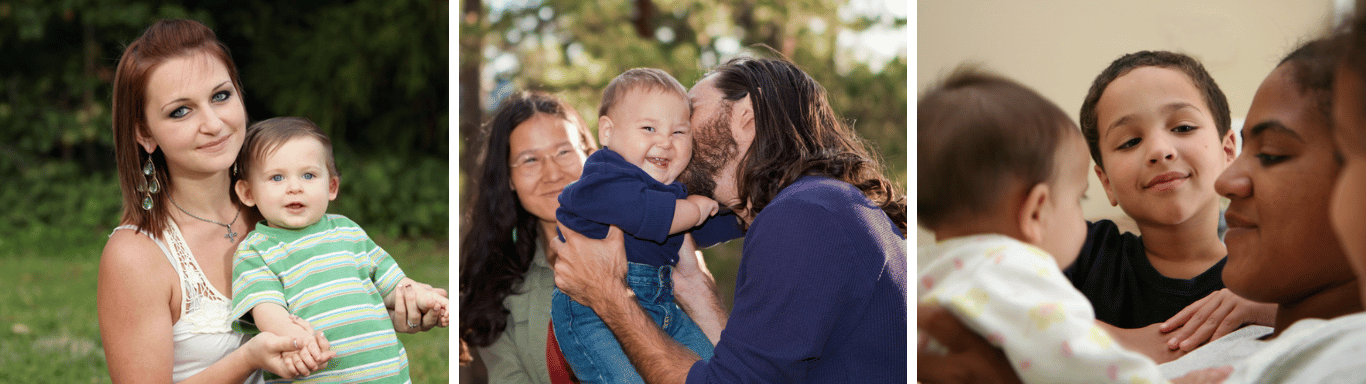
To protect the privacy and dignity of the families we serve, photos of people are stock images intended to be representative of the people we support.
Guided by a steering committee of community partners — with YWCA Seattle | King | Snohomish as lead agency — the Collaborative brings together expertise from housing, behavioral health, early childhood education, peer support, and legal advocacy under one coordinated approach. At the heart of the team are Parent Ally Mentors: certified peer counselors who had navigated similar challenges themselves. The posts below tell the story: how it started, how it worked, and what we learned along the way.
A note on where we are now: Homeward House has paused direct services in Snohomish County while we seek new funding, and we are not able to accept referrals at this time. For help finding support, contact Washington 211.
The model works. More than 80% of families we served stayed together or reunified. Sustaining funding for this kind of work is challenging, and our hope and intention is to secure support to allow services to resume.
Everything we learned lives on in the Homeward House Toolkit, free for any community ready to build its own version.
Who Homeward House Serves
We provide direct services to expectant parents and parents of young children in Snohomish County who are experiencing substance use disorders, poverty, and related hardships such as homelessness or actual or potential involvement with Child Protective Services. Our work is especially focused on preventing the harm caused by family separation, which has disproportionately affected generations of Black, Indigenous, and People of Color (BIPOC).
What Homeward House Does
Our mission is to nurture the vital parent-child bond in the face of crisis, treatment and recovery.
We do that by reducing trauma, strengthening protective factors, addressing systemic barriers that disproportionately affect families impacted by poverty, substance use disorders, and involvement in the child welfare system.
We focus on preserving and strengthening the bond between parents and their children so families can recover and stay together whenever possible. Our goal is to help families heal and create healthy and stable foundations for the future.
Our strength lies in building genuine trust with families, coordinating care and support services across multiple agencies, and providing timely and judgment-free support and practical guidance.
We help families build the skills, relationships, and stability they need for long-term success — breaking cycles of trauma and system involvement that can last for generations.
A Comprehensive Approach
“…my parent ally mentor has NEVER judged any situation or anything I’ve said or gone through but only related or help me overcome the dark days. They ar the most supportive support I have.”
— Parent
Why Homeward House Matters
Secure parent-child attachment forms the foundation for healthy emotional and cognitive development while protecting children from long-term trauma. By supporting families through vulnerable periods, we create lasting pathways for healing and growth.
Family separation causes profound trauma and imposes significant costs on communities—emotionally, developmentally, and financially. Research consistently shows that investing in prevention and family support services produces better outcomes at lower costs than foster care placement.
Our work focuses on keeping children safely connected to their parents whenever possible, helping families build the skills, relationships, and stability needed for long-term success. This approach doesn’t just save money—it breaks cycles of trauma and system involvement that can persist for generations.
Decades of research shows that investing in prevention and family support services produces better outcomes at lower costs than foster care placement.
Advisory Committee
Leadership
- YWCA Seattle|King|Snohomish — Lead Agency
- ChildStrive
- Domestic Violence Services of Snohomish County
- Housing Hope
- Homeward House Parent Voice Group
- Interfaith Family Shelter
- Law Offices of Brice & Timm
- Snohomish County Health Department
Other Members
- F.I.R.S.T. Legal Clinic
- Ideal Option
- Institute for Black Justice
- Providence Regional Medical Center
- Snohomish County Family Recovery Court
- Snohomish County Recovery Coalition
- Sound Pathways: PCAP (Parent Child Assistance Program)
- Tulalip Tribes: Beda chelh
- WithinReach
- Wonderland Child & Family Services: Hope Rising Clinic
Funders
Homeward House Collaborative would not be possible without the partnership and support from these funders: